Primary Ingredient Basis: 1000 g boneless chicken thighs = 100%
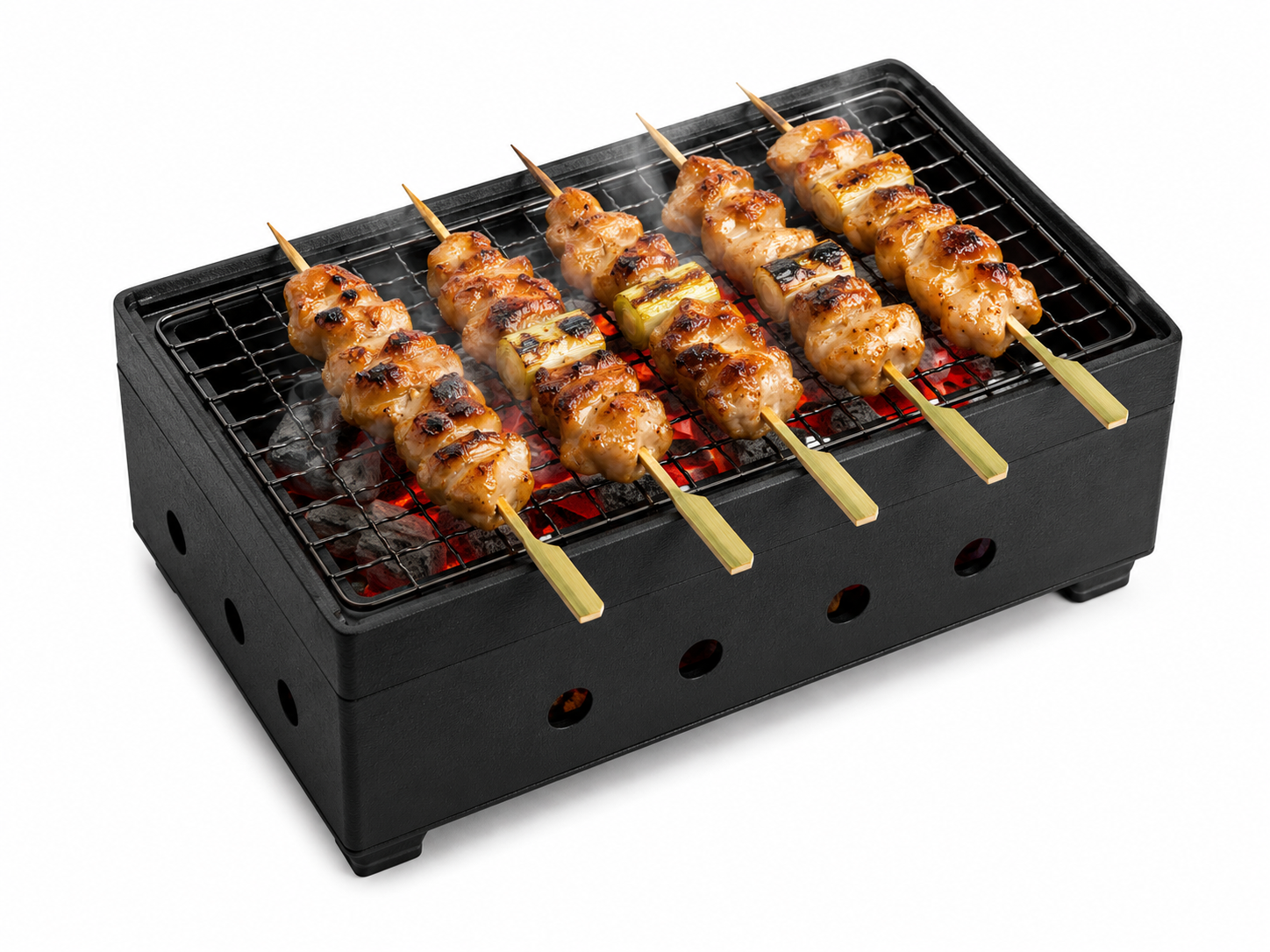
Charcoal-grilled chicken thighs lacquered with a sweet soy-garlic glaze, inspired by Korean fried chicken, yakitori technique, and live-fire cooking.
PHASE A — CHICKEN PREPARATION
Components
| Ingredient | Quantity | Scaling |
|---|---|---|
| Boneless chicken thighs | 1000 g | 100.0% |
| Salt | 12 g | 1.2% |
| Black pepper | 3 g | 0.3% |
| Cornstarch | 30 g | 3.0% |
| Gluten-free flour mix, rice flour and potato starch | 10 g | 1.0% |
Method
- Trim chicken thighs if needed and pat dry thoroughly.
- Combine salt, pepper, cornstarch, and gluten-free flour mix.
- Lightly dust chicken with the mixture.
- Keep the coating extremely thin; it should encourage browning and help the glaze cling without creating a fried crust.
PHASE B — QUICK CUCUMBER PICKLE
Components
| Ingredient | Quantity | Scaling |
|---|---|---|
| Cucumber, thinly sliced | 200 g | 20.0% |
| Rice vinegar | 60 g | 6.0% |
| Sugar | 20 g | 2.0% |
| Salt | 3 g | 0.3% |
Method
- Combine rice vinegar, sugar, and salt.
- Toss with sliced cucumber.
- Refrigerate until needed.
PHASE C — LIME CREMA
Components
| Ingredient | Quantity | Scaling |
|---|---|---|
| Sour cream | 150 g | 15.0% |
| Lime juice | 20 g | 2.0% |
| Soy sauce | 5 g | 0.5% |
| Sugar | 3 g | 0.3% |
Method
- Combine sour cream, lime juice, soy sauce, and sugar.
- Whisk smooth.
- Refrigerate until serving.
PHASE D — SOY GARLIC SESAME GOCHUJANG GLAZE
Components
| Ingredient | Quantity | Scaling |
|---|---|---|
| Soy sauce | 60 g | 6.0% |
| Honey | 50 g | 5.0% |
| Brown sugar | 20 g | 2.0% |
| Garlic, finely grated | 20 g | 2.0% |
| Ginger, grated | 8 g | 0.8% |
| Rice vinegar | 20 g | 2.0% |
| Gochujang | 15 g | 1.5% |
| Sesame oil | 10 g | 1.0% |
| Butter | 20 g | 2.0% |
Method
- Combine soy sauce, honey, brown sugar, garlic, ginger, rice vinegar, and gochujang in a saucepan.
- Simmer gently for 2-3 minutes until lightly thickened.
- Remove from heat and whisk in sesame oil and butter.
- Hold warm. The glaze should be glossy and lightly syrupy, not thick like barbecue sauce.
PHASE E — HIBACHI COOKING AND LACQUERING
Components
| Ingredient | Quantity | Scaling |
|---|---|---|
| Prepared chicken thighs | 1000 g raw basis | 100.0% |
| Soy garlic sesame gochujang glaze | all | 22.3% |
Method
- Prepare a hibachi or charcoal grill for medium-high direct heat.
- Grill chicken thighs mostly undisturbed to develop colour and light char.
- Allow fat to render slowly and encourage occasional flare-ups for smoke and caramelisation.
- During the final 1-2 minutes of cooking, begin brushing chicken with glaze.
- Flip and glaze repeatedly to build lacquered layers.
- Cook until the thickest point reaches 72-74 C.
- Rest chicken for 3-5 minutes before slicing.
PHASE F — TACO ASSEMBLY
Components
| Ingredient | Quantity | Scaling |
|---|---|---|
| Small flour tortillas | 8-12 units | - |
| Shredded cabbage | 150 g | 15.0% |
| Glazed chicken, sliced | all | 100.0% |
| Quick cucumber pickle | all | 28.3% |
| Lime crema | all | 17.8% |
| Spring onion, sliced | 30 g | 3.0% |
| Coriander leaves | 10 g | 1.0% |
| Toasted sesame seeds | 5 g | 0.5% |
Method
- Warm tortillas over the grill.
- Slice chicken into bite-sized pieces.
- Assemble tacos with cabbage, glazed chicken, cucumber pickle, lime crema, spring onion, coriander, and toasted sesame seeds.
- Serve immediately.
STRUCTURAL NOTES
The thin starch coating increases dry surface area for browning and gives the glaze a light anchor without turning the chicken into a fried preparation. The glaze is applied only at the end because soy, honey, brown sugar, and gochujang can scorch over direct charcoal heat. Pickle and lime crema counter the sweet-salty glaze with acidity and cooling fat.
FAILURE MODES
-
Symptom: Glaze tastes burnt or bitter.
-
Likely cause: Sugary glaze was applied too early over direct heat.
-
Corrective action: Grill chicken first, then lacquer only during the final 1-2 minutes.
-
Symptom: Chicken surface is pasty rather than browned.
-
Likely cause: Coating was too thick or chicken was wet before dusting.
-
Corrective action: Pat chicken dry and use only a very thin starch layer.
-
Symptom: Tacos taste heavy or overly sweet.
-
Likely cause: Too much glaze or insufficient acid contrast.
-
Corrective action: Use restrained glaze layers and increase cucumber pickle or lime crema acidity.
VARIATIONS
- Spicier: increase gochujang or add chilli oil to the glaze.
- Smokier: add a small amount of smoked paprika to the chicken seasoning.
- Extra charred: finish glazed chicken directly over open flame for light blistering.