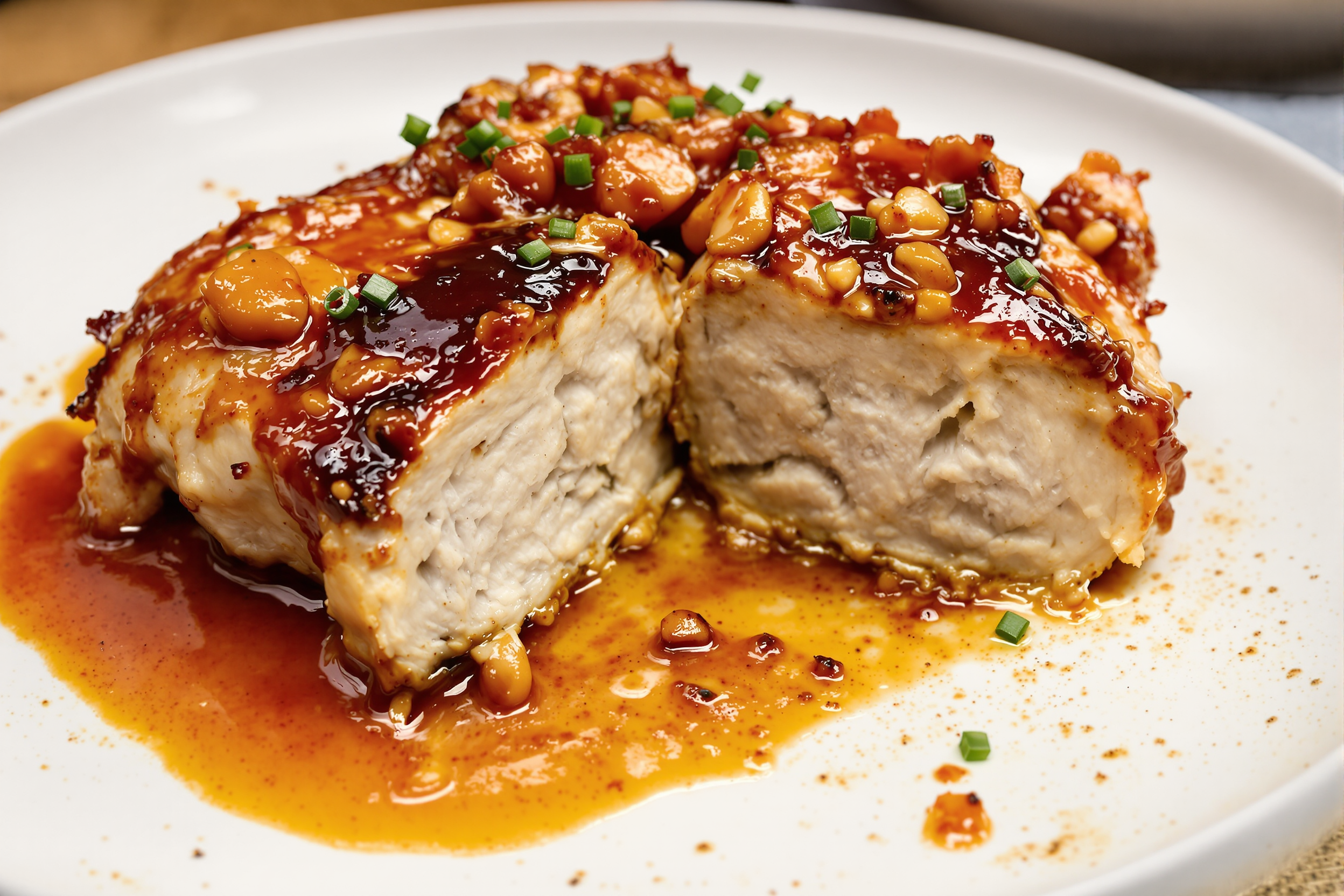
Primary Ingredient Basis: 1000 g chicken thighs (bone-in, skin-on) = 100%
Sweet, tangy, umami-rich South African steakhouse-style sauce glazed over crisp-skinned chicken.
PHASE A — SEASON & REST
Components
| Ingredient | Quantity | Scaling |
|---|---|---|
| Chicken thighs (bone-in, skin-on) | 1000 g | 100.0% |
| Salt | 12 g | 1.2% |
| Black pepper | 3 g | 0.3% |
Method
- Pat chicken very dry (skin included).
- Season evenly with salt and pepper.
- Rest 20–30 min at room temperature.
PHASE B — SEAR & ROAST
Components
| Ingredient | Quantity | Scaling |
|---|---|---|
| Seasoned chicken thighs | 1000 g | 100.0% |
| Neutral oil | 20 g | 2.0% |
Method
- Preheat oven to 200 C.
- Heat a heavy oven-safe pan over medium-high heat and add oil.
- Place chicken skin-side down; press lightly for full contact.
- Sear 6–8 min until deeply golden and fat rendered.
- Flip and transfer pan to oven.
- Roast until thickest piece reaches 74 C (about 12–18 min, depending on size).
- Rest 5–10 min before glazing.
PHASE C — MONKEY GLAND SAUCE
Components
| Ingredient | Quantity | Scaling |
|---|---|---|
| Neutral oil or rendered chicken fat | as needed | — |
| Garlic, minced | 10 g | 1.0% |
| Fresh ginger, grated | 10 g | 1.0% |
| Tomato sauce (ketchup) | 150 g | 15.0% |
| Apricot chutney | 120 g | 12.0% |
| Worcestershire sauce | 40 g | 4.0% |
| Dijon mustard | 20 g | 2.0% |
| Red wine vinegar | 20 g | 2.0% |
| Soy sauce | 15 g | 1.5% |
| Brown sugar (optional) | 15 g | 1.5% |
| Smoked paprika | 3 g | 0.3% |
| Chili flakes | 2 g | 0.2% |
| Water | 60 g | 6.0% |
Method
- Warm a small splash of oil (or rendered chicken fat) in a saucepan over medium heat.
- Sauté garlic and ginger 30–60 s until fragrant.
- Add remaining ingredients.
- Simmer gently 5–8 min until glossy and slightly thickened (sauce should cling, not run).
- Adjust to taste: more vinegar for tang, more chutney/sugar for sweetness, more soy/Worcestershire for depth.
PHASE D — GLAZE & SERVE
Components
| Ingredient | Quantity | Scaling |
|---|---|---|
| Rested roasted chicken | 1 batch | — |
| Monkey gland sauce | 1 batch | — |
Method
- Brush warm sauce over rested chicken, or return chicken to the pan and glaze over low heat 2–3 min.
- Serve with extra sauce on the side.
STRUCTURAL NOTES
- Dry skin + hard sear drive browning (Maillard reaction) for savory depth that balances the sweet-tangy sauce.
- Gentle simmer reduces water and concentrates sugar/acid/salt, creating a glossy glaze that clings to the chicken.
- Resting after roasting stabilizes juices; glazing after rest keeps the skin crispier than saucing early.
FAILURE MODES
-
Symptom: Pale, rubbery skin.
-
Likely cause: Skin not dried; pan not hot enough; poor skin contact.
-
Corrective action: Pat very dry, preheat pan, press skin-side down, and don’t move chicken until it releases.
-
Symptom: Sauce is thin and watery.
-
Likely cause: Under-reduced or too much water added.
-
Corrective action: Simmer longer at a gentle bubble until it coats a spoon; add water only to control thickness.
-
Symptom: Sauce tastes flat or cloyingly sweet.
-
Likely cause: Not enough acid/salt/umami to balance chutney/ketchup.
-
Corrective action: Add vinegar for brightness and soy/Worcestershire for depth; simmer 1–2 min and re-taste.
-
Symptom: Chicken is dry.
-
Likely cause: Overcooked beyond 74 C or held hot too long before serving.
-
Corrective action: Pull at 74 C, rest briefly, and glaze just before serving.