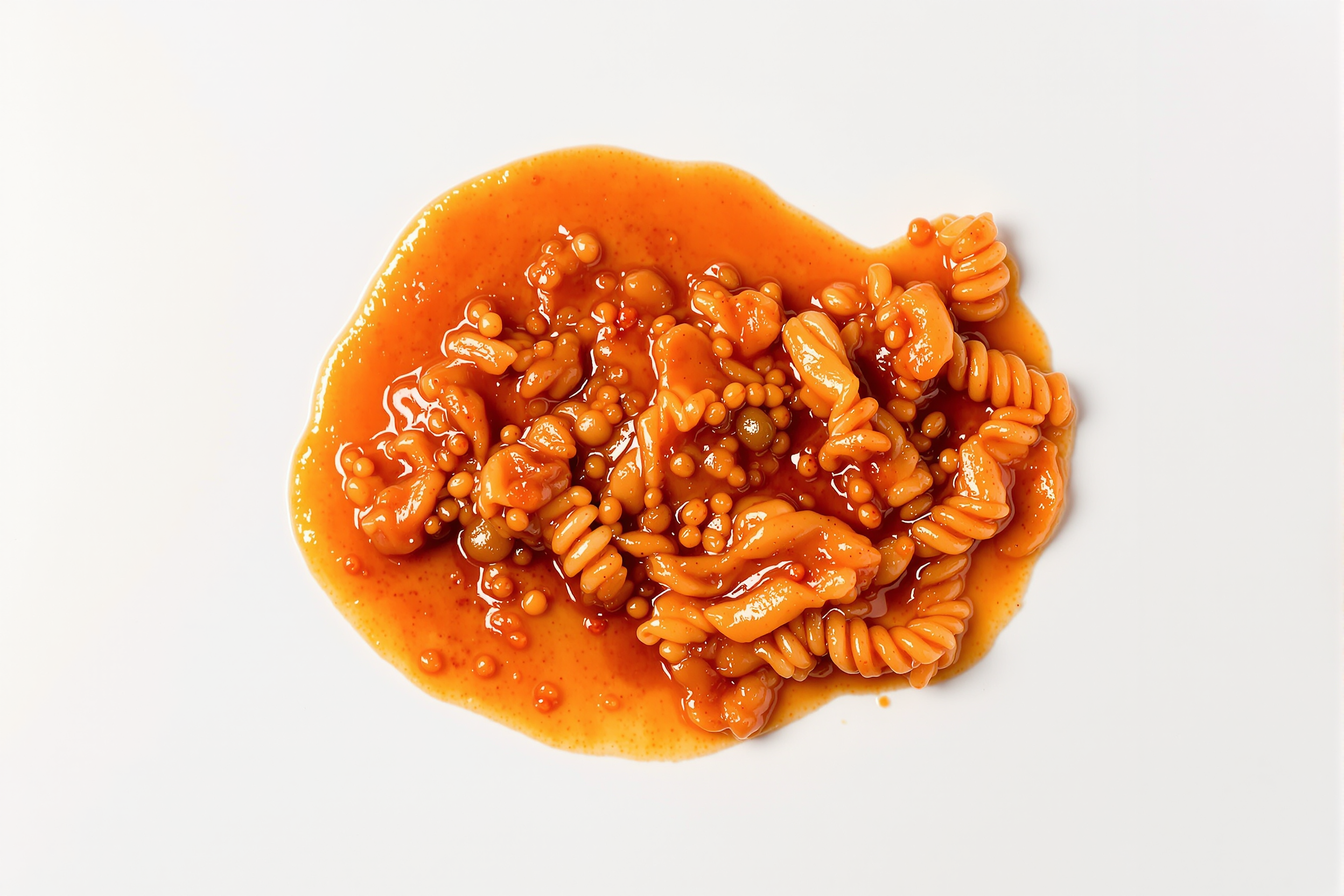
Primary Ingredient Basis: 150 g guanciale = 100%
PHASE A — RENDER & AROMATICS
Components
| Ingredient | Quantity | Scaling |
|---|---|---|
| Guanciale (lardons) | 150 g | 100.00% |
| Garlic, thinly sliced | 8 g | 5.30% |
| Fresh red chili, sliced | 5 g | 3.30% |
| Black pepper | 2 g | 1.30% |
Method
- Place guanciale in a cold wide pan.
- Bring to medium heat and render slowly until fat releases and meat turns golden and lightly crisp (6–8 min).
- Remove guanciale with a slotted spoon; reserve.
- In rendered fat, gently sauté garlic and chili until fragrant but not browned.
PHASE B — BUILD THE SAUCE
Components
| Ingredient | Quantity | Scaling |
|---|---|---|
| Black olives, chopped | 80 g | 53.30% |
| Capers, rinsed | 15 g | 10.00% |
| Canned whole tomatoes, crushed | 400 g | 266.70% |
Method
- Add olives and capers to the aromatic fat; sauté 1–2 min.
- Add crushed tomatoes and bring to a steady simmer.
- Reduce 10–15 min until thickened and glossy.
- Taste and adjust seasoning — salt is rarely needed due to guanciale and olives.
PHASE C — PASTA & EMULSION
Components
| Ingredient | Quantity | Scaling |
|---|---|---|
| Dried pasta (rigatoni/spaghetti) | 300 g | 200.00% |
| Reserved pasta water | ~60 g | 40.00% |
| Fresh parsley, chopped | 10 g | 6.70% |
Method
- Cook pasta in heavily salted water until al dente.
- Transfer pasta directly into sauce with ~60 g starchy pasta water.
- Return guanciale to pan.
- Toss vigorously to emulsify fat, tomato, and starch into a cohesive glaze.
- Finish with parsley and black pepper. Serve immediately.
RELATED LINKS
Techniques
- [[Technique - Emulsification]]
- [[Technique - Fat Rendering]]
- [[Technique - Reduction]]
Principles
- [[Principle - Fat As Flavour Carrier]]
- [[Principle - Salt Balance]]
- [[Principle - Starch Water Emulsification]]
Ingredients
- [[Ingredient - Black Olives]]
- [[Ingredient - Black Pepper]]
- [[Ingredient - Canned Whole Tomatoes]]
- [[Ingredient - Capers]]
- [[Ingredient - Dried Pasta]]
- [[Ingredient - Fresh Parsley]]
- [[Ingredient - Fresh Red Chili]]
- [[Ingredient - Garlic]]
- [[Ingredient - Guanciale]]
STRUCTURAL NOTES
- Rendering guanciale slowly extracts fat without scorching proteins, preventing bitterness.
- The sauce relies on emulsification: rendered pork fat + tomato solids + starch-rich pasta water form a stable, glossy coating.
- Salt balance is critical — olives, capers, and cured pork already provide significant salinity.
FAILURE MODES
-
Symptom: Sauce feels greasy and separated.
-
Likely cause: Insufficient pasta water or inadequate tossing.
-
Corrective action: Add small increments of hot pasta water and agitate vigorously.
-
Symptom: Sauce tastes flat.
-
Likely cause: Tomatoes under-reduced.
-
Corrective action: Extend simmer to concentrate flavour.
-
Symptom: Guanciale tough or burnt.
-
Likely cause: Heat too high during rendering.
-
Corrective action: Start from cold pan and render gently.